Les Misérables
A musical by Claude-Michel Schönberg, with a libretto by Alain Boublil and Jean-Marc Natel, based on Victor Hugo's novel. It premiered in London on 8 October 1985 and has run there almost daily for more than 30 years, been translated into 21 languages, and staged in 42 countries.
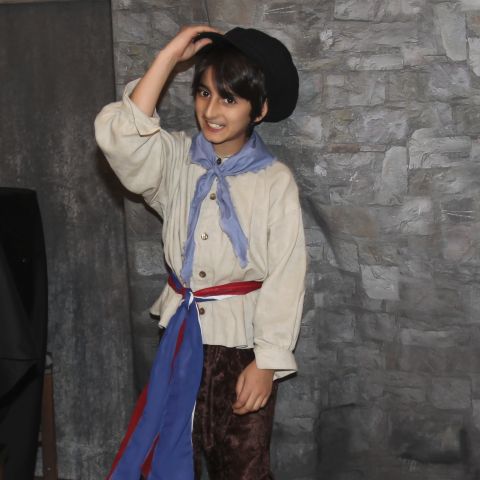
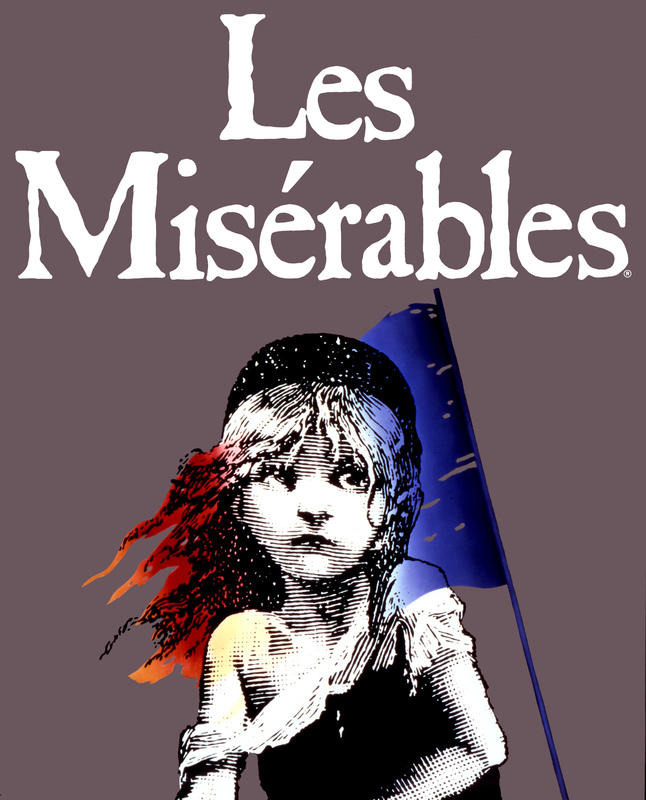 They say the idea of writing the musical came to the composer Claude-Michel Schönberg while he was watching the musical "Oliver!" and was struck by the performance of the boy in the title role. Gavroche immediately came to his mind, and that is how it all began. Alain Boublil and Jean-Marc Natel wrote the libretto, and Schönberg recorded a CD on which he performed all the musical numbers himself. In one year 260,000 copies of that disc were sold. In September 1980 Robert Hossein staged the musical at the Palais des Sports in Paris, and in 100 performances half a million (!) spectators saw it. Then it had to make way for a visiting Soviet circus. That ended the French chapter in the life of the musical.
In 1983 the English producer Cameron Mackintosh decided to stage the musical in London. The translation was made by Herbert Kretzmer over six months of work. At Cameron's request he also wrote a prologue and substantially reworked several scenes. On 8 October 1985 "Les Misérables" premiered at the Barbican Theatre in London. The critics' reviews were deadly. The "purists" wrote that the musical had vulgarised the great novel. Lovers of vaudeville were baffled as to why there was so little dancing and so many corpses (indeed, it is the only musical in which almost all the "good" characters die while the "bad" ones survive and prosper). But the audience decided otherwise, and soon all the tickets were sold out months in advance.
Since then, for more than 30 years now, the musical has run in London almost every day. It has been translated into 21 languages and staged in 42 countries. In Russia, however, where almost every musical hit has been staged over the last 15 years, it had never been shown. A knowledgeable acquaintance of ours explained that, on the one hand, the rights holders of "Les Misérables" demand guarantees of the highest level of production, which requires a lot of money, and on the other, the host side is not sure that such a tragic, dramatic musical will draw enough spectators to pay for itself. A few years ago the film of the same name was shown in Moscow to empty halls, which confirmed the Russian businessmen's doubts. Then again, it didn't wow audiences in America either.
 Our first acquaintance with the musical came in June 1997, when Alexei Ivashchenko and Georgy Vasiliev came to California on tour. They told us they had just seen the musical "Les Misérables" on Broadway and intended to stage it in Moscow. It didn't work out, which may be for the best: who knows, otherwise "Nord-Ost" might never have been written.
Years passed, and Khor Domashniy came into being. After staging "Nord-Ost" we had the idea of doing something just as dramatic and grand, and the search for suitable material began. In April 2009 the Sadovnikovs' younger daughter Dasha took part in a school production of "Les Misérables". We went to see it and understood: this is it! A "school" version of the vocal score was found, Alexei Ivashchenko passed on to us his translations of several arias and choruses made in 1998 — "At the End of the Day", "Master of the House", "Do You Hear the People Sing?", the arias of Eponine and little Cosette, and several other scattered drafts. Alexei Sadovnikov translated the rest over the course of a year. Svetlana Rymareva reworked the piano part of the vocal score, making it richer and more interesting.
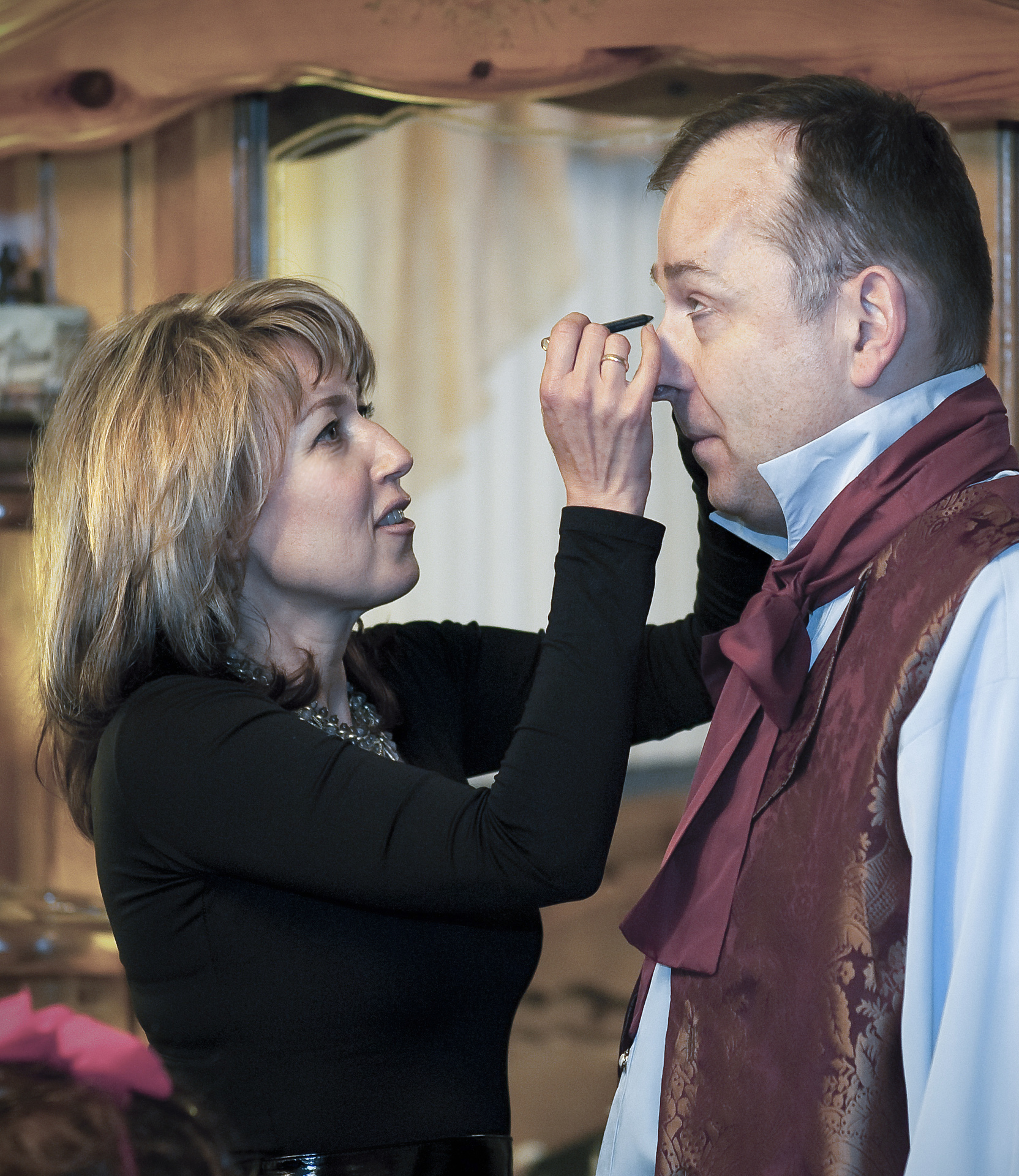
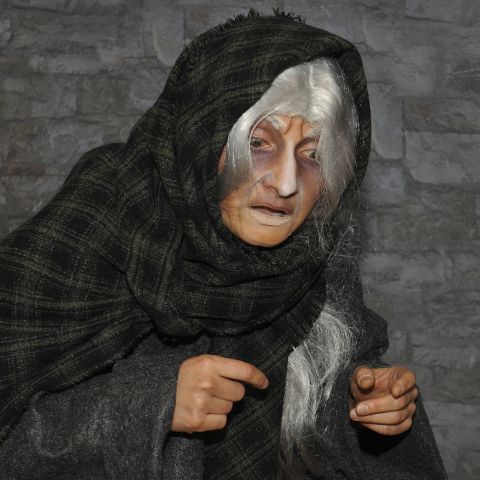
Now all that remained was to find an artist. Kira Stakhovskaya recommended that we approach her son's painting teacher, Elena Litinskaya, and ask whether any of the students in her studio would like to take part in this project. There was no "seditious" thought of involving a professional, that is, Lena herself. So her decision to take the reins was very inspiring and delightful! The whole backdrop of the stage depicted a Parisian slum street, which Lena and her students painted in oil on canvas (more than 250 square feet). What amazed us most was that Lena knows the properties and processing methods of the most unexpected materials. For example, you ask her: "Lena, how shall we make tile roofs?" and the answer is ready at once: "Right, so: we bring paper bags from the shops, coat them with glue solution, crumple them with our hands..." Or: "Lena, how do we make a huge turban?" and without a second's thought she delivers detailed instructions: "You buy a rubber yoga ball, inflate it, ..." And what a wonderful barricade we made out of burlap and pieces of furniture! The stage immediately took on a professional look, which contributed a great deal to the success of the show. In addition, Lena taught our actors to come on stage in make-up matching their stage character. In this production you may notice that in the last scene Valjean has visibly gone grey.
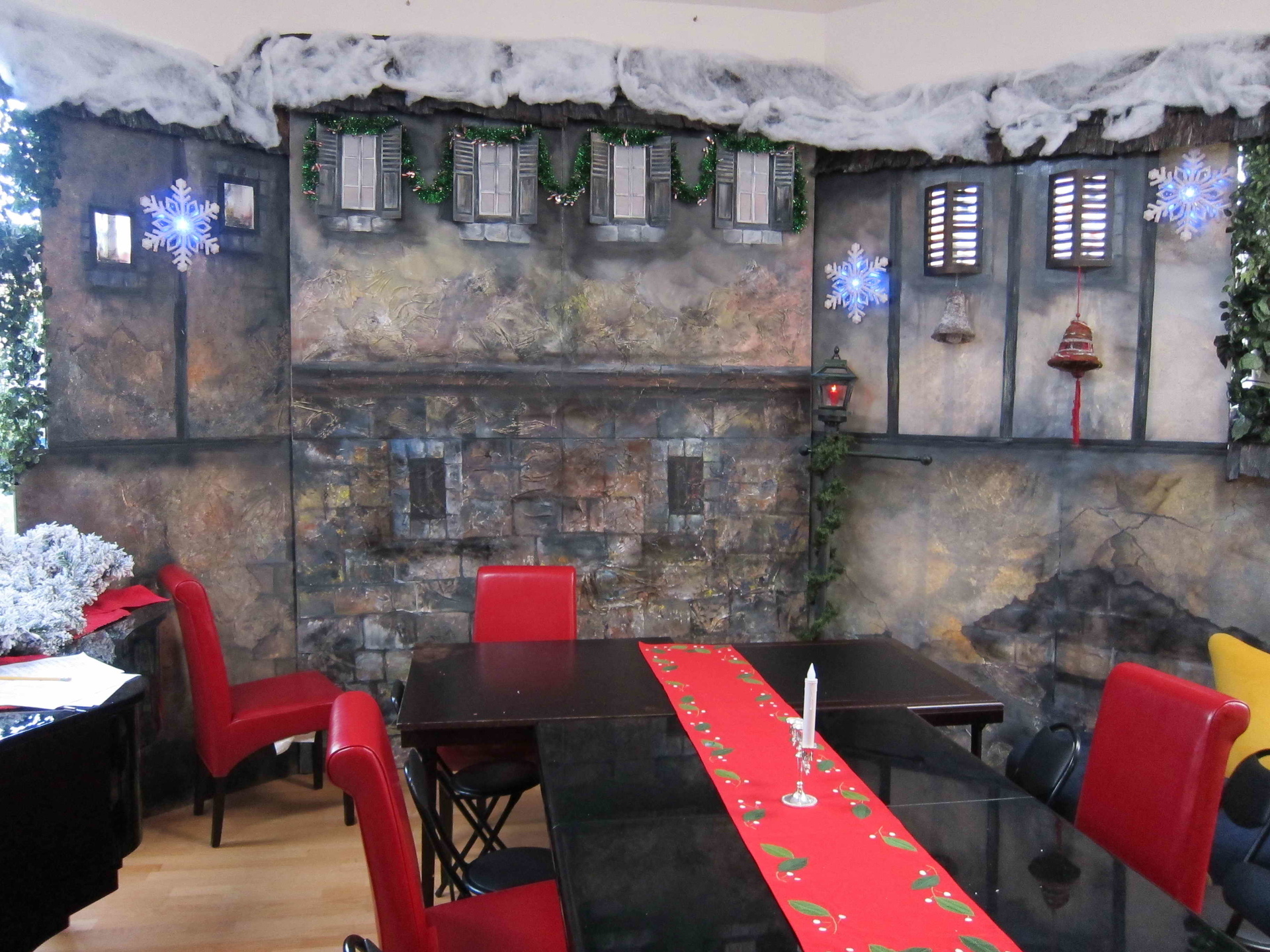 The sets were mostly finished by the end of December and a wonderful thought occurred to us: why not see in the New Year in the Paris slums? That is how a tradition was born that has continued for many years now: to see in the New Year, (almost) the whole company together, in at least partly finished sets for the next project.
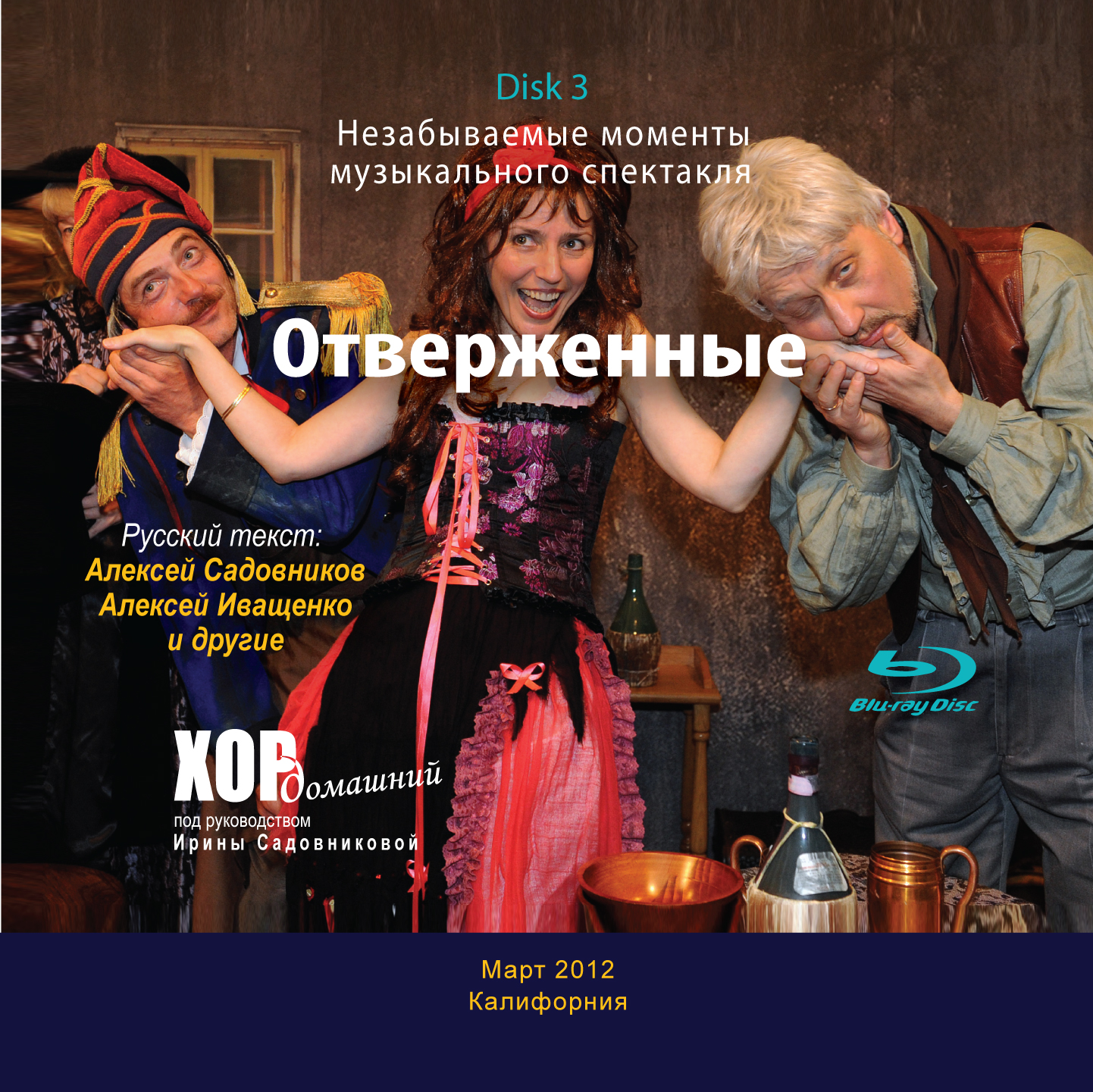
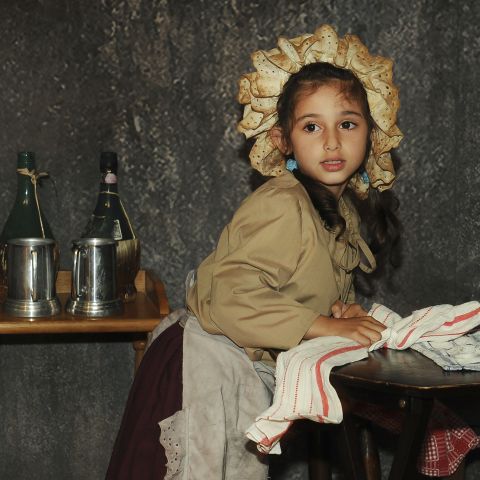
We rehearsed for a long and merry time, and the third disc of "bloopers" turned out to be packed. But one funny moment, unfortunately, was not filmed: for the scene in the inn we needed to "age" several wicker-covered bottles. This is easy to do: green-brown paint is poured into a clear glass bottle, smeared over the inner walls by repeated shaking, where it then dries. At one rehearsal Alexei decided to demonstrate a bottle he had painted the day before. He brings it into the house, takes a "swig," and... The paint hadn't dried yet... It's a good thing the costume wasn't damaged, and the paint was eventually scrubbed off his face and from the inside.
Cast
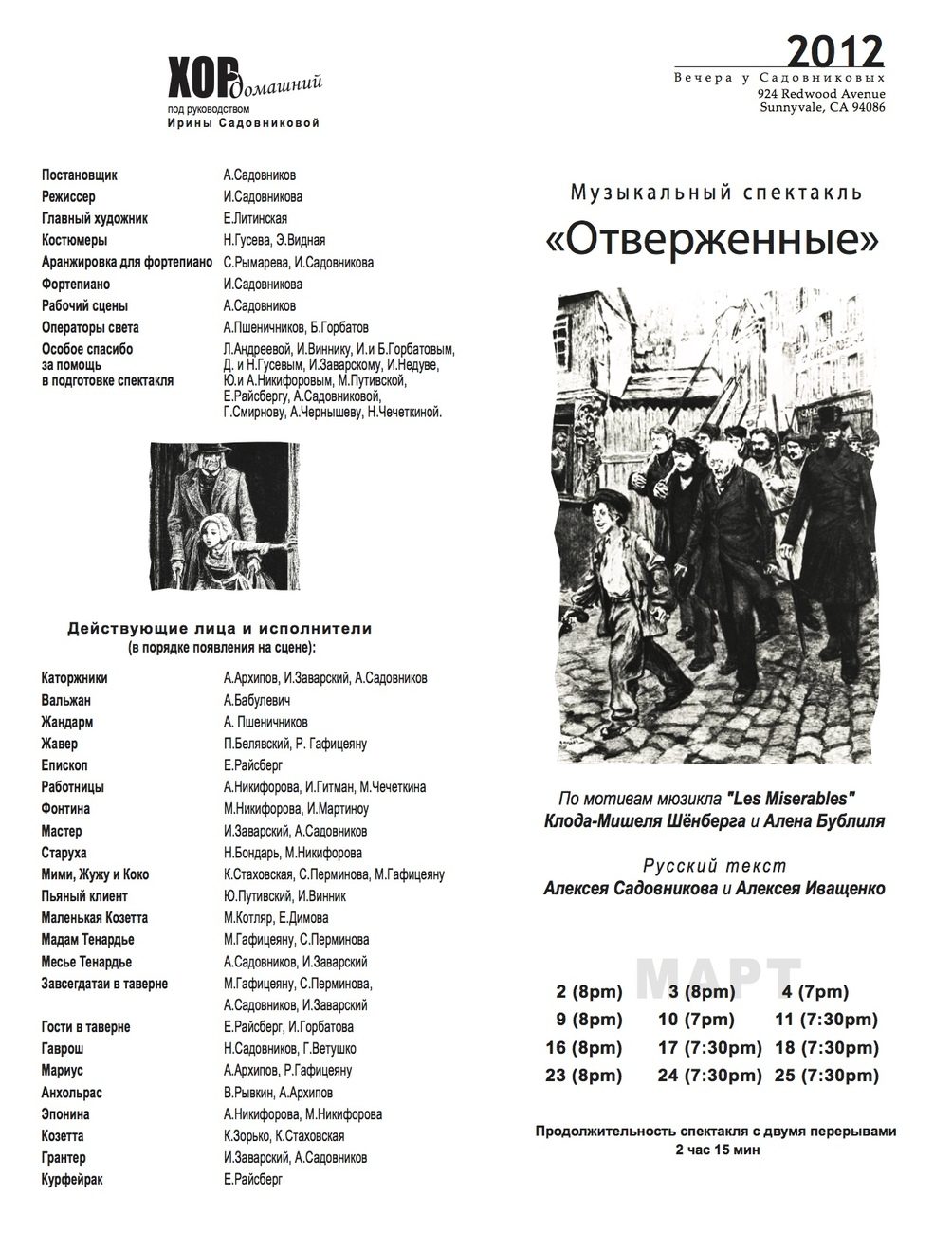
Playbill
Gallery


Video